

Proving Fault in a Louisiana Car Accident
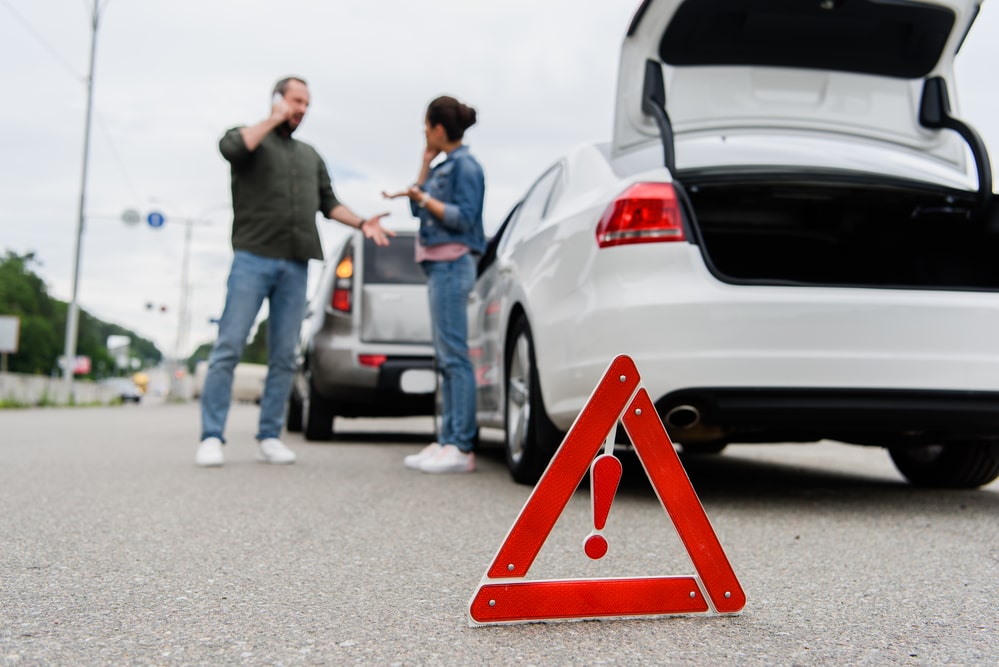
Louisiana is a tort state. To recover compensation after a crash, you have to prove someone else caused it. That sounds simple enough. But proving fault in a real car accident involves collecting specific evidence, understanding how Louisiana’s negligence standard works, and preparing for the other side to push back on every element of your claim. Baker drivers who know what that process actually requires are in a much better position from the start.
What Negligence Requires Under Louisiana Law
Louisiana personal injury claims are built on the legal concept of negligence. Proving it requires establishing four elements:
Duty. The at-fault driver owed a duty of care to others on the road. Every licensed driver carries this duty. It’s almost always a given.
Breach. The driver failed to meet that duty. Running a stop sign, speeding, tailgating, driving while distracted — all examples of conduct that crosses the line.
Causation. The driver’s breach directly caused the collision and the resulting injuries.
Damages. The injured person suffered actual, measurable harm as a result.
All four must be present. A driver who blew a red light but didn’t actually injure anyone hasn’t created a compensable claim. One whose negligent conduct caused a serious collision has.
What Evidence Proves Fault After a Baker Crash
The evidence that establishes fault starts at the scene and continues through the investigation that follows.
The police report documents the officer’s observations, including physical evidence, road and weather conditions, statements from drivers and witnesses, and often an initial assessment of fault. It isn’t binding in civil litigation, but it matters significantly.
Witness statements from people who saw the crash independently carry real weight. Their contact information should be collected at the scene because witnesses become harder to locate over time.
Photographs and video taken immediately after the crash document vehicle positions, damage, skid marks, and road conditions in ways that written descriptions can’t replicate. Surveillance footage from nearby businesses and traffic cameras sometimes captures the crash itself. This footage is often overwritten quickly, which is why preservation demands matter.
Cell phone records can establish whether the at-fault driver was texting or calling in the moments before impact when distracted driving is suspected.
Event data recorders in modern vehicles store pre-crash data including speed, braking, and throttle position. This information can be decisive in disputes about what actually happened.
How Louisiana’s Pure Comparative Fault Rule Plays Into This
Louisiana operates under a pure comparative fault system. Every party in a crash can be assigned a fault percentage, and damages are reduced proportionately by each party’s share. If you’re found 20% at fault, your recovery drops by 20%. Unlike some states, Louisiana doesn’t bar recovery even when the injured person bears a significant share — though higher fault percentages obviously reduce what’s recoverable.
This gives the other driver’s insurance company a direct financial incentive to find something you did wrong. They’ll look at your speed, your following distance, your lane position, your prior violations, your seatbelt use. Building a thorough evidence record from the beginning limits what they can attribute to you.
A Baker car accident lawyer investigates the crash independently, gathers and preserves evidence before it disappears, and builds the complete fault picture before any settlement discussion happens.
Why Acting Quickly Is Necessary
Evidence deteriorates. Witnesses move. Surveillance footage gets deleted. The at-fault driver’s insurer begins its investigation immediately. The Louisiana statute of limitations for car accident claims arising after July 1, 2024 is two years — but that clock is not a reason to wait. The cases that resolve well are the ones where the evidence was preserved early and the investigation happened before the other side had time to control the narrative.
Palmintier, Thrower, and Treuting Injury Attorneys has recovered more than $1 billion for Louisiana accident victims with more than 80 years of combined experience. If you were hurt in a crash in the Baker area and need to understand what proving fault actually involves, reach out to a Baker car accident lawyer for a free consultation.